Who it's for
Do any of the following strike a chord?
- Are you overwhelmed or frustrated by Revit?
- Are you seeing more and more RFPs listing Revit as a required deliverable format, and you're not sure you're ready?
- Are you a small to medium sized firm with no in-house Revit experts, and you're struggling to build and maintain good standards and procedures?
- Do you want to be able to coordinate your designs better and more intuitively?
- Does it feel like your team is taking forever to get the hang of Revit?
- Do the same issues crop up over and over again on your projects?
- Do you burn fee on fiddly Revit problems instead of quality design and production tasks?
If so, then RevX might be for you. We aren't interested in convincing you that you ought to transition to Revit. That's for you to decide. When you want to or need to, we're here to help.
Adopting Revit as your production tool involves a learning curve. You can't go from decades of intimate familiarity with one platform to an entirely new tool representing a new paradigm of project delivery and expect to maintain the same capacity to execute work right away. When you switch, you initially aren't going to be as good at Revit as you were at CAD.
This is the cliff you fall off. You can't avoid the cliff. You are going to go over the cliff. You have no choice. That's the bad news.
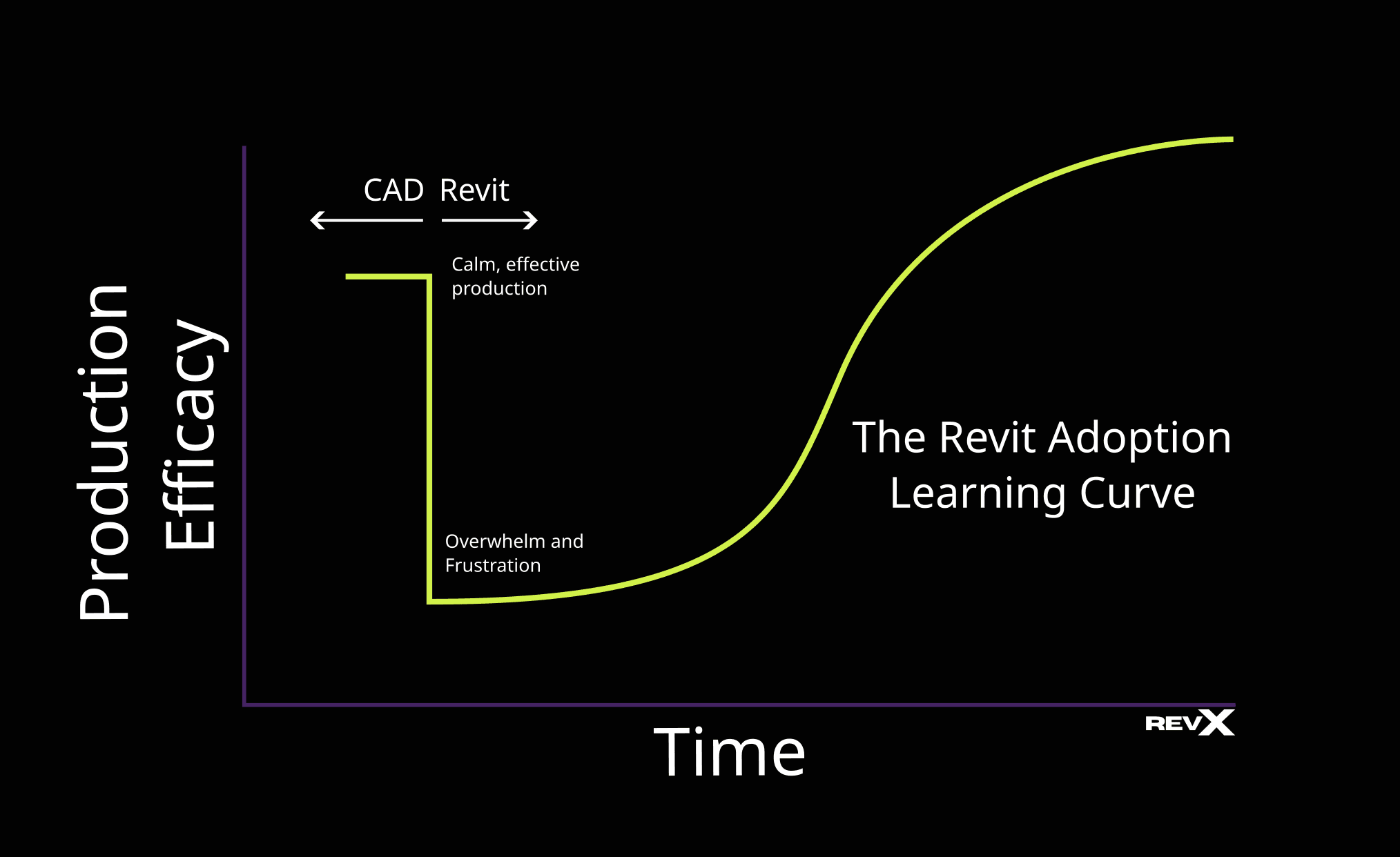
The good news is that you do have a choice as to how long you're going to stay at the foot of the cliff, and how quickly you're going to climb the learning curve. Maybe right now you're peering over the edge of the cliff, rightly concerned about taking the leap. Maybe you're at the base of the cliff already, wondering what happened and why every project is such a mess now.
That's where we come in. We help firms run back up the learning curve as quickly as possible. Our immediate goal is to get you at least as capable as you were before. That means you execute production just as fluently and quickly as you did with CAD.
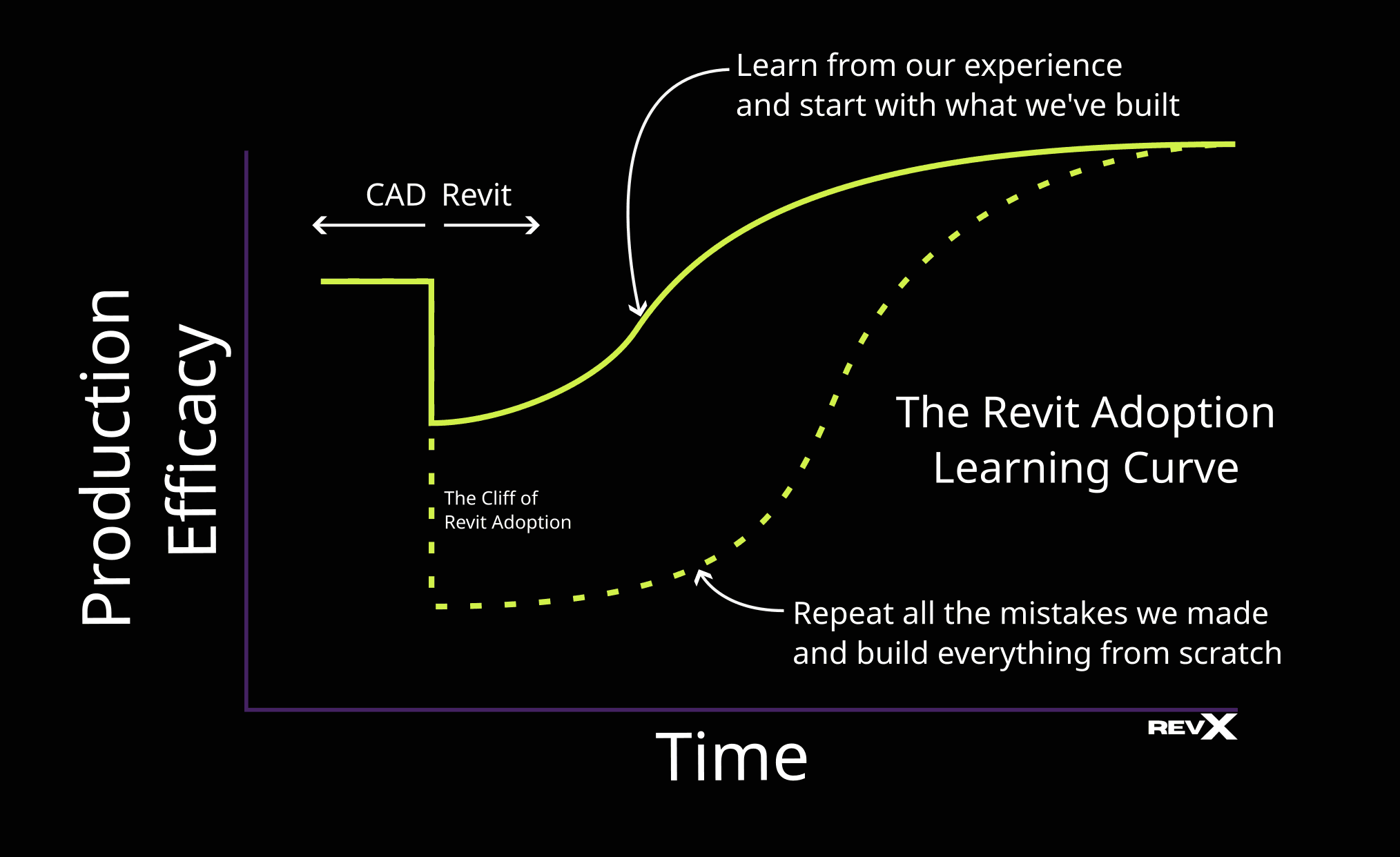
Once you've locked in your prior level, we'll show you the way to unlock even higher levels of capacity. BIM tools do empower you to do design, analysis, and coordination faster and better than was possible in CAD-based tools.
But you have to walk before you run.